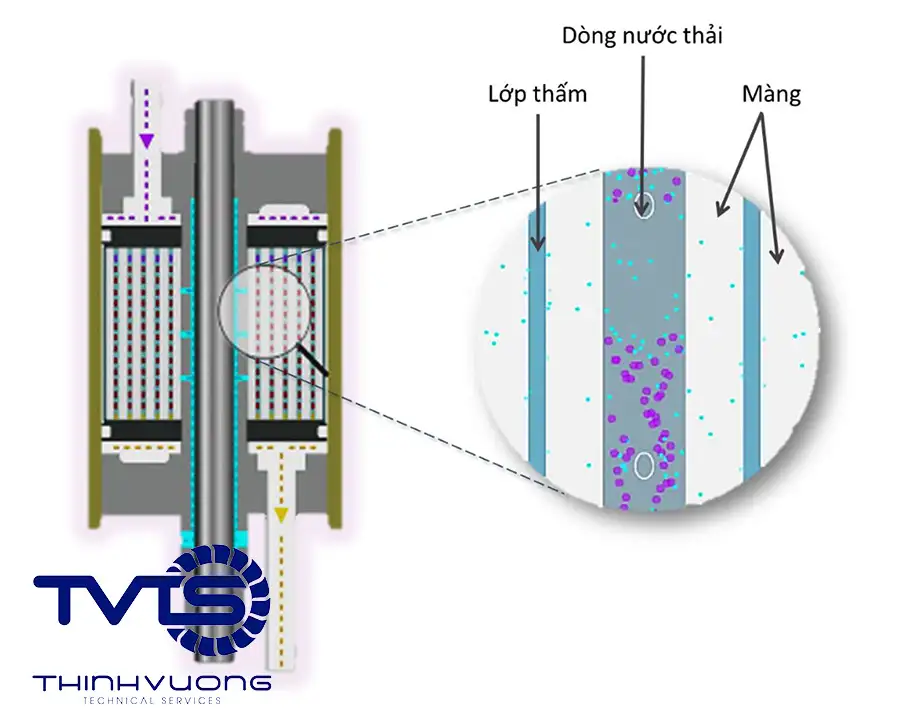
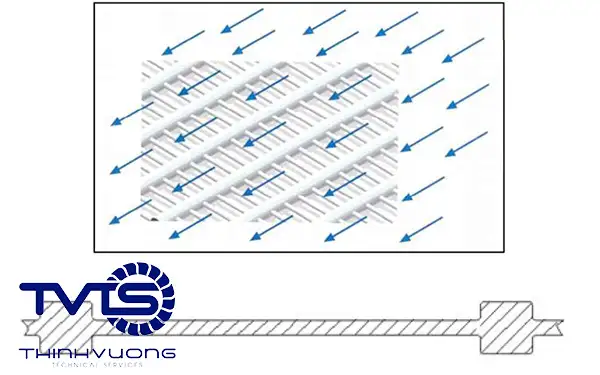
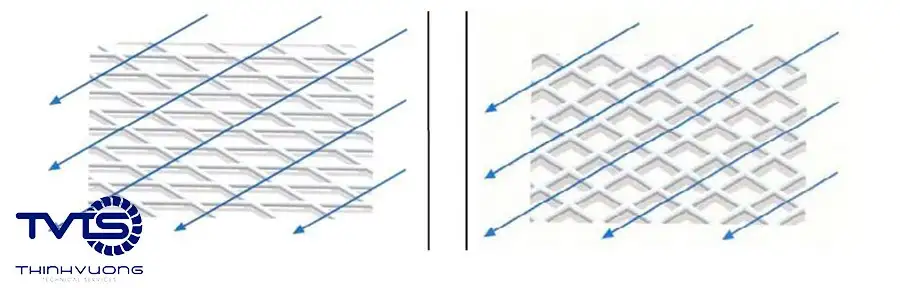
TIPA supplies genuine Rochem membranes. The TSRO spacer tube module builds on the strengths of the PFRO disc tube module: it combines a spiral wound membrane with an open feed channel. The gap of more than 1 mm between membrane layers reduces pre-treatment needs and fouling. Six modules are installed in series in one pressure vessel, so wastewater flows through them in a sinusoidal path of short, turbulent streams. Each TSRO module has 2.5 times the membrane area of a PFRO module, which means fewer modules and a lower investment.
Key features
- Open feed channel wider than 1 mm, less pre-treatment and fouling
- Six modules in series per pressure vessel, sinusoidal turbulent flow
- 2.5 times the membrane area of a PFRO module
- Higher clean water recovery and fewer modules than conventional spiral RO
- Treats wastewater with very high COD, BOD, nitrogen and ammonium
- Long membrane life and low total cost of ownership
Rochem modules compared with conventional RO
| Parameter | Rochem RO module | Conventional RO module |
|---|---|---|
| Feed SDI | < 15 (TSRO) / < 20 (PFRO) | < 5 |
| Feed turbidity | < 15 NTU | < 0.1 NTU |
| Suspended solids | up to 1,000 ppm | < 50 ppm |
| Salinity | Runs on 2,000 – 32,000 ppm without changing the design | Only the fixed salinity of the design or lower |
| Fouling | Low, thanks to the open channel and turbulent flow | Fouls easily, needs frequent cleaning and replacement |
| Feed channel | Open channel, about 1 mm | 3 – 7 µm |
About Rochem
Rochem membranes were first used in 1973 for seawater desalination for navies. The PFRO disc tube module was developed in the 1980s and from 1989 became widely used for landfill leachate. Rochem was ISO 9001 certified in 1999, introduced the STRO module in 2005 and the TSRO module in 2014. Rochem systems have run worldwide for more than three decades, many of them on wastewater with COD and BOD up to 140,000 ppm, as well as on warships, submarines, offshore platforms and passenger ships.