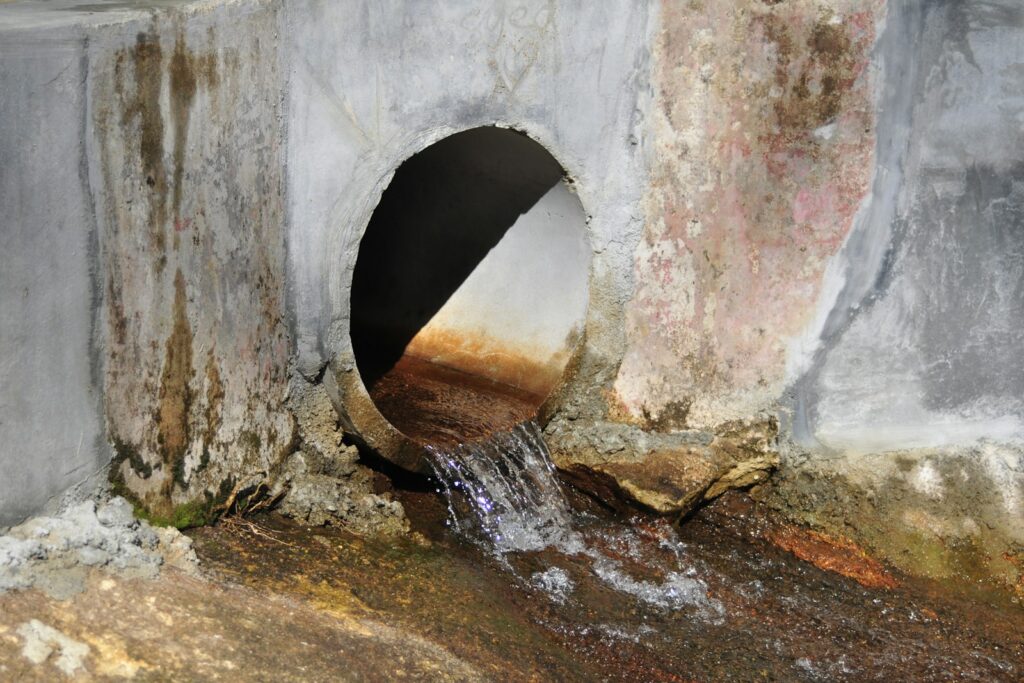
Industrial wastewater differs from domestic sewage because its composition depends on the production process. A food factory produces wastewater rich in organic matter, while an electroplating plant releases heavy metals and a textile plant discharges color and chemicals. There is no single standard solution: each plant needs a treatment line designed for its own wastewater and discharge standard.
Step 1: Wastewater characterisation
Design starts by measuring flow and analysing key parameters such as COD, BOD, suspended solids, nitrogen, phosphorus, oil and grease, heavy metals and pH, over several production cycles. This shows the load the system must handle and which pollutants are the hardest to remove.
Step 2: Combining treatment processes
- Physical: screening, oil separation, equalization tanks and flotation (DAF) to remove solids and grease
- Chemical: pH adjustment, coagulation, precipitation of metals, oxidation of difficult compounds
- Biological: anaerobic and aerobic treatment to remove organic matter and nitrogen
- Membrane: MBR to replace the clarifier, and UF/RO to polish water for reuse
Step 3: Reuse and zero liquid discharge
With rising water costs and stricter permits, many plants now reuse treated water for cooling, washing or even production. Membrane systems make this possible. When discharge is not allowed, RO concentrate can be further reduced with high-pressure membranes and evaporation to reach zero liquid discharge (ZLD).
Keys to stable operation
Good equalization, reliable dosing, regular monitoring and trained operators are as important as the technology itself. TIPA provides design, equipment, installation and operation support so your treatment plant stays within standards at a reasonable cost.
Industries that need treatment
Besides central plants in industrial parks and high-tech zones, almost every manufacturing sector produces wastewater that must be treated, for example: textile dyeing, pharmaceuticals, paper, beverages, sugar, paint, leather, electroplating, printing ink, cosmetics, power plants, ceramic tiles, mechanical processing, laundries, wood, plastics, cement, seafood processing, rubber, mining and metal production, slaughterhouses and craft villages.
What a modern solution should offer
- Proven, up-to-date technology with a simple process
- High treatment efficiency and water recovery
- An easy path to reuse or zero liquid discharge
- Low operating cost
- Automatic, stable operation with remote monitoring
Common chemicals
Coagulants (aluminium sulphate, ferric chloride), flocculants (polyacrylamide – PAM), oxidants and disinfectants (chlorine, ozone, hydrogen peroxide), pH control (sulphuric acid, caustic soda) and precipitants such as sodium sulphide. Microorganisms then break down organic matter in the biological stage.
Real example: an industrial waste treatment plant
A plant in Binh Duong that collects industrial wastewater from many factories treats 250 m³ per day. The line: screening → ammonia removal → settling → Fenton oxidation → settling → SBR biological tank → settling → sand filter → 10 µm pre-filter → high-pressure pump (up to 60 bar) → Rochem TSRO membrane modules. Clean water is stored for reuse or discharge; the concentrate is incinerated together with solid waste and sludge.
| Parameter | Inlet | After treatment |
|---|---|---|
| COD (mg/l) | ~ 10,000 | 75 |
| TDS (mg/l) | ~ 3,000 – 4,000 | 50 |
| Ammonium as N (mg/l) | ~ 300 – 400 | 5 |