Leachate is the liquid that seeps through waste in landfills and waste treatment plants. It is one of the most difficult types of wastewater: COD can reach tens of thousands of mg/l, ammonia is very high, salinity and color are strong, and the composition changes as the landfill ages.
Characteristics of leachate
- Young leachate: high biodegradable organic matter
- Old leachate: persistent organics, high ammonia, low biodegradability
- High salinity, color and heavy metals
- Flow varies strongly with rainfall
A typical treatment line
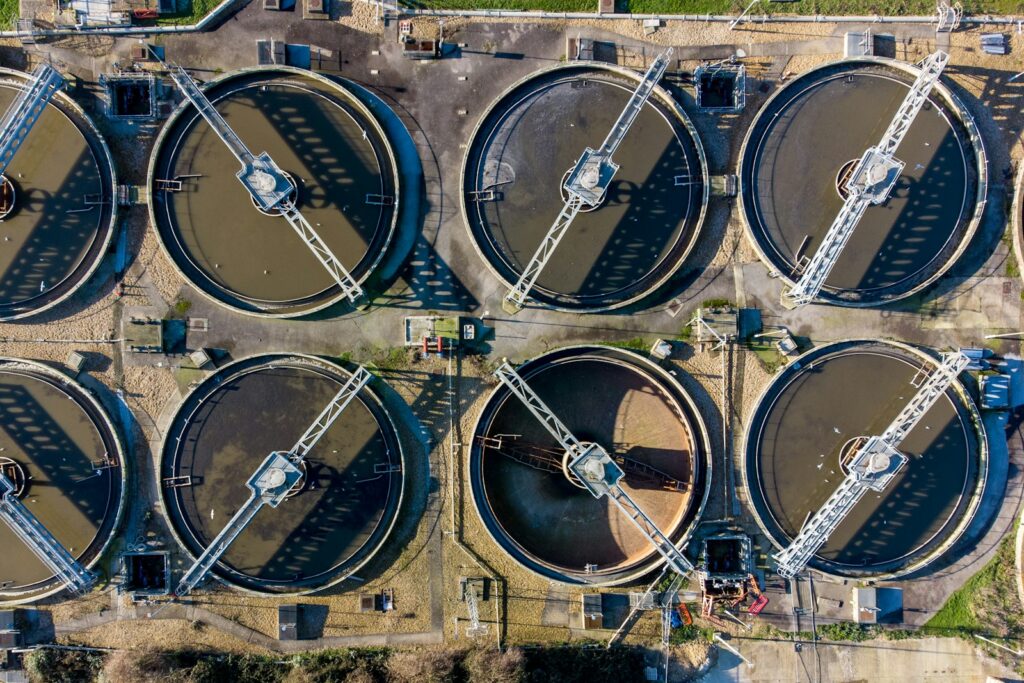
Most modern plants combine biological and membrane processes. After equalization and removal of solids, biological treatment (often with nitrification and denitrification, sometimes in an MBR) removes biodegradable organics and ammonia. The effluent then passes to reverse osmosis, which removes the remaining salts, color and persistent organics to meet discharge standards.
Why DTRO and STRO
Ordinary spiral wound RO membranes foul quickly in leachate. Disc tube (DTRO) and spacer tube (STRO) modules have open flow channels and operate at high pressure, so they tolerate high suspended solids, scaling and salinity. In some plants, DTRO is used directly on raw leachate after simple pre-treatment, giving a compact system that can be expanded module by module.
Handling the concentrate
RO produces a concentrate that must be managed. Options include recirculation to the landfill where allowed, further concentration with high-pressure modules, and evaporation. Planning for the concentrate from the beginning is essential to a sustainable solution. TIPA supplies DT/ST and MBR membrane modules and supports the design and operation of leachate treatment plants.
Leachate in numbers
Leachate composition depends on the waste, the climate, the terrain, the landfill method and local hydrogeology. TDS ranges from 1,000 to 60,000 ppm and BOD₅ and COD from 100 to 60,000 ppm. Pollution is usually highest when a landfill is 2 – 3 years old and then falls slowly, but never to discharge levels on its own. In 2020 Vietnam had more than 900 domestic waste landfills, and only about 20% of them were sanitary. Treated leachate must meet QCVN 25:2009/BTNMT and QCVN 40:2011/BTNMT.
Methods used
- Plant-based treatment (phytoremediation) for low-load polishing
- Coagulation – flocculation and electrocoagulation
- Biological treatment for COD, BOD, nitrogen and phosphorus
- RO membranes for salts, color and persistent organics
- Disinfection by chemicals, UV or ozone, and final pH adjustment
Reference plants using Rochem TSRO modules
| Plant | Capacity | Inlet | Outlet |
|---|---|---|---|
| Thuy Phuong, Thua Thien Hue | 215 m³/day | TDS < 8,500 ppm; COD < 20,000 ppm | TDS < 500 ppm; COD < 50 ppm; QCVN 25:2009 column A, reused for irrigation and cleaning |
| Binh Duong Water – Environment JSC | 250 m³/day | TDS < 12,000 ppm; COD < 3,000 ppm | TDS < 500 ppm; COD < 50 ppm; QCVN 25:2009 column A |